Below is reflections and facts written by brother Ghulam Esposito Haydar of Myriad Foundation and Taste Ramadan. It contains his own reflections and a bit of history of some places he visited recently.
HOW MERCIFUL IS OUR CREATOR?
The Prophet sallalāhu alayhi wa-sallam said:
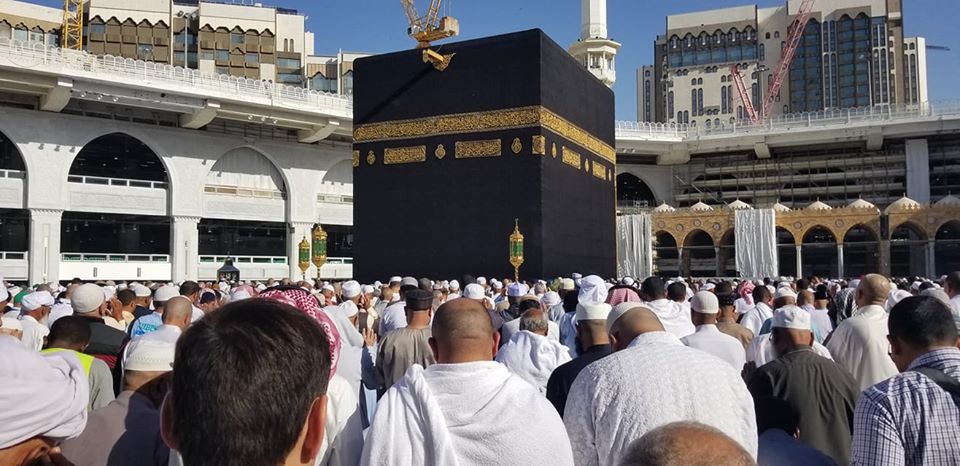
“Allāh showers unto those present in the masjid of Makkah every day one hundred and twenty mercies. Sixty mercies are for those who are performing tawāf, forty for those engaged in salāh, and twenty for those who are merely looking (at the Ka‘ba)” [Al Tabrani]
So just looking at the Ka’bah with the naked eye from within the sanctity of the Haram involves reward and Alhamdulillāh for this view.
THE SMALL VALLEY OF BAKKAH
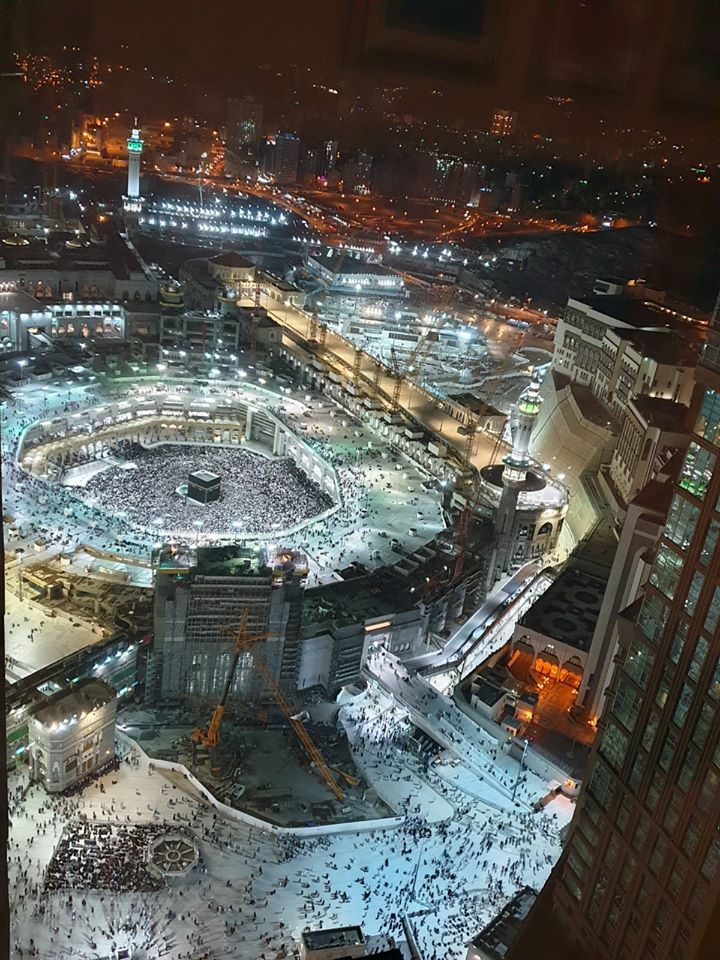
Just looking out into the city from this very high position on the 30th floor, you see the rocky mountainous valleys not too far from the Harram and you realise how it must have been at the time of Ibrahīm alayhis salām and later during the time of the Prophet sallalāhu alayhi wa-sallam and the Companions Radi-Allāhu-anhum. It’s crazy how people lived here. It’s literally a dry desert that is only inhabitable because of Hājar, the wife of the Prophet Ibrahīm alayhis salām. Hajar whilst desperately seeking water for her infant son Isma’īl alayhis salām ran seven times back and forth in the scorching heat between the two hills of Safa and Marwah in desperate search for water and then Allāh granted her an ever lasting water source through the angel Jibrīl who hit the ground with his wing until fresh and pure water emerged. That became known as Zamzam water which provides unlimited water to pilgrims to this day. Before this water source, the valley of Bakkah was an inhabitable land.
Then you think about the army of Abraha who came to destroy the Ka’ba with his army of elephants but were destroyed by little birds sent by Allāh who threw stones like missiles stored in their little beaks.
Then you think about all the historical figures from the Quraysh, the first martyrs of Islām, Sammaya and Yasir. The torture of Bilal. The house of Arqam. Radi-Allāhu-anhum. All this took place in this small valley between the rocky mountain ranges. Subhān-Allāh.
REFLECTING ON THE AMAZING HISTORY
Whilst sitting and waiting for the ‘asr salāh at the harram, gazing at the Ka’ba, I was reflecting on it’s amazing history.
According to tradition, the Ka’ba was built directly above and in the shape of the House in Heaven called Baitul Ma’amūr where 70,000 angels visit each day and never return. Allāh in his infinite mercy ordained a similar place on earth and Prophet Adam ‘alayhis salām was the first to build this blessed place. It was then ruined in the flood of Nūh ‘alayhis salām, rebuilt many many years later on the orginal foundation by the Prophet Ibrahīm ‘alayhis salām and his son Isma’īl ‘alayhis salām. It was then re-established as a the place of monotheism by the Prophet Muhammad sallallāhu ‘alayhi wa-sallam after the conquest of Makkah from the polytheists who placed idols in the Ka’ba.
Subhān-Allāh, how many Prophets of Allāh have been involved in this Great House on Earth?
Allāhu-Akbar Allāhu-Akbar lā-illāha illallāh
Allāhu-Akbar Allāhu-Akbar walillāhil-hamd
THE HAJAR AL-ASWAD (THE BLACK STONE)
The starting and end place of the tawāf, the circling of the Ka’ba.
Alhamdulillāh my wife Sadia got to kiss it yesterday at her first attempt on her first visit without any of the usual struggle and I got to in the early morning without much of a struggle either.
The Black Stone was brought from Jannah and presented to the Prophet Ibrahim ‘alayhis salām and placed by him on the eastern corner of the Ka’ba. The Prophet’s cousin and companion ibn Abbas radi-Allāhu-an narrated that the Prophet sallalāhu alayhi wa-sallam said: “The Black Stone came down from Paradise and it was whiter than milk, but the sins of the sons of Adam turned it black.” [Tirmidhi]
The Black Stone was originally a complete stone but due to various historical incidents now consists of eight pieces of varying sizes affixed to a large stone and encased in a silver frame. The silver frame was first made by Abdullah bin Zubair radi-Allāhu-an and replaced by later Khalifas as the need arose.
When the Quraysh were reconstructing the Ka’ba after it had been damaged in a fire, a dispute arose about who would have the right to return the Black Stone in it’s original place in its eastern corner. A civil war was about to break out. To avoid bloodshed, the Quraysh agreed on the judgement of the first person to come through one of the entrances to the blessed sanctuary. The first to come through was none other than the Prophet Muhammad sallalāhu alayhi wa-sallam. This was five years before his prophethood. In his wisdom, he put the Black Stone in the middle of a piece of cloth and asked a representative of each clan to hold one of the edges of the cloth and raise it close to its place. Then the Prophet sallalāhu alayhi wa-sallam himself picked it up with his own hands and restored it to its original place. This was how the Prophet sallalāhu alayhi wa-sallam prevented a war from breaking out among the Quraysh.
Umar radi-Allāhu-an once kissed the black stone and said, “I know well that you are just a stone that can do neither good nor harm. Had I not seen the Prophet kiss you, I would not have done so.”

THE CAVE OF HIRA ON JABL NUR (THE MOUNTAIN OF LIGHT)
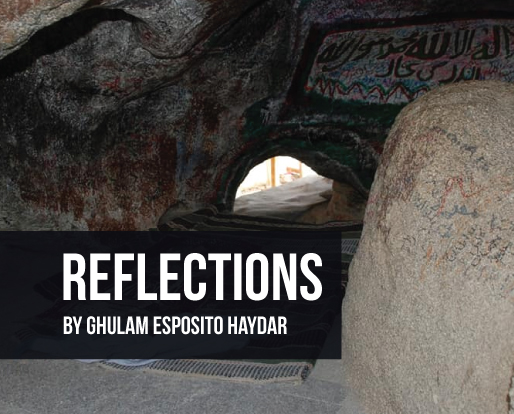
Disliking the materialism along with the idolatrous and frivolous practices of his compatriots in Makkah, the Prophet Muhammad sallalāhu ‘alayhi wa-sallam often retreated to a cave in a mountain just outside of Makkah. The cave was known as Hira. There, he fasted and meditated. On one occasion, after a number of indistinct visionary experiences, the Prophet sallalāhu ‘alayhi wa-sallam was visited by an overpowering presence and instructed to recite words of such beauty and force. It was the angel Jibrīl (Gabriel) who was instructing him with these wonderful words. These were the words of Allāh. This experience shook the Prophet sallallāhu ‘alayhi wa-sallam to the core.
It was here one night in the month of Ramadān that Allāh called the Prophet sallallāhu ‘alayhi wa-sallam to his service. This night, known as Layla-tul-Qadr, was the night Allāh chose for the light of truth to descend for the whole of humanity, the Qur’ān. Out of the stillness came a voice saying, ‘READ!’. It was Jibrīl (Gabriel), standing before him. The Prophet sallallāhu ‘alayhi wa-sallam replied saying, ‘I cannot read’. Jibrīl embraced him with such might that he thought he was going to die and again repeated, ‘READ!’. The Prophet sallallaahu ‘alayhi wa-sallam replied, ‘what shall I read?’ And then the first verse of the Qur’ān were revealed to him:
“Read! In the Name of your Lord, Who has created (all that exists), has created man from a clot (a piece of thick coagulated blood). Read! And you Lord is Most Generous. Who taught by the pen. Taught man that which he knew not.” (Qur’ān 96:1-5)
This was his first revelation from Allāh. At the time, the Prophet sallallāhu ‘alayhi wa-sallam was fourty years old. These were the first five verses of the Qur’ān to be revealed to the Prophet sallallaahu ‘alayhi wa-sallam. Muhammad the son of Abdullah, the son of Abdul-Muttallib had become a Prophet of Allāh, sallallāhu ‘alayhi wa sallam.
Once it was over he ran straight to his wife Khadijah radi-Allāhu-anha and said, ‘Cover me, cover me’. Khadijah consoled him. She then took him to her cousin, Waraqah ibn Naufel, who was a learned man in religion and knew the Gospel and Torah well. Waraqah ibn Naufel told him that what he was experiencing is what the previous Prophets had been through. He said, ‘This is the very Angel that came to Mūsa! O! If that I were younger, if only I would remain alive when your people will drive you away from your home.’ The Prophet sallallāhu ‘alayhi wa-sallam asked, “What! Will they drive me out?’” and Waraqah ibn Naufel replied ‘Yes, none has ever come with the like of what you have come with but was treated with hostility. And if I should live to see that day, I shall support you strongly.’
After several similar experiences, the Prophet sallallāhu ‘alayhi wa-sallam finally began to reveal the messages he was receiving to his family and tribe members.


JABL THAWR – THE MOUNTAIN OF THAWR
Due to the constant persecution of the Muslims in Makkah, along with the repeated attempts on Prophet’s sallalāhu ‘alayhi wa-sallam life, a number of Muslims were instructed by the the Prophet sallallāhu ‘alayhi wa-sallam to migrate to the land of Abyssinia to be under the protection of the Christian King, Negus. This was the first migration of the Muslims. Shortly after, the Prophet sallallāhu ‘alayhi wa-sallam and his few hundred followers left Makkah and traveled to Yathrib (later renamed Madina), the oasis town where his father was buried which became known as the second migration.
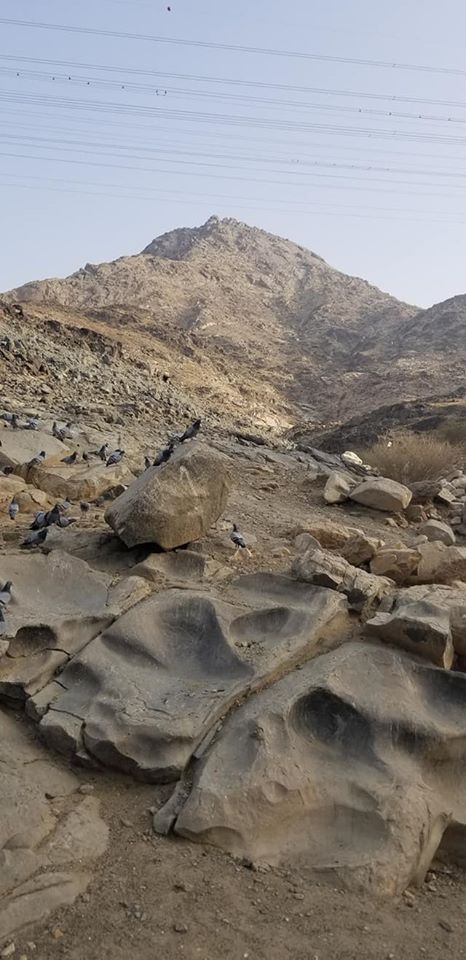
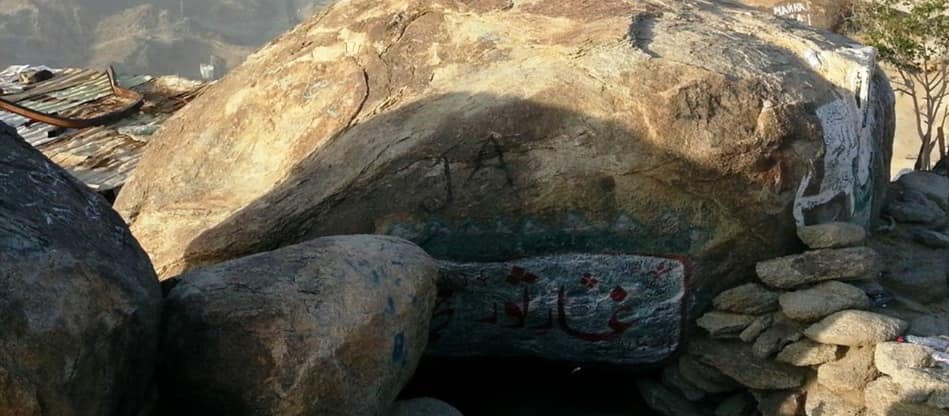
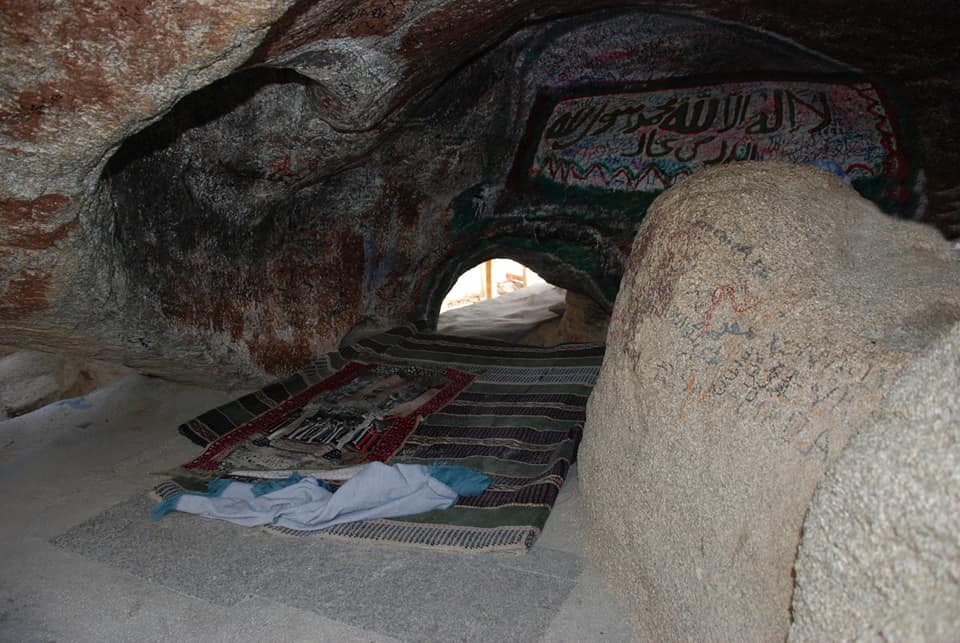
This place here, Mount Thawr (or Jabal Thawr) is the mountain that contains the cave in where the Prophet sallalāhu alayhi wa-sallam and his best friend Abu Bakr radi-Allahu-an sought refuge for three days and nights from the polytheist Quraysh as they left Makkah on their emigration to Madina.
Instead of trekking north in their exit out of Makkah, the Prophet sallalāhu alayhi wa-sallam and Abu Bakr radi-Allahu-an left through the south of the city knowing the polytheist Quraysh would be looking for them on the common route. When the Quraysh could not find any sign of them on the usual route, they hired scouts to search all over. To escape the manhunt, the Prophet sallalāhu alayhi wa-sallam and Abu Bakr retreated up mount Thawr.
When the Prophet sallalāhu alayhi wa-sallam and Abu Bakr radi-Allahu-an arrived at the cave on Mount Thawr, Abu Bakr entered first to clear away anything that might injure the Prophet sallalāhu alayhi wa-sallam. He found a few holes and stuffed them with pieces of cloth to prevent any snakes from entering. The Prophet sallalāhu alayhi wa-sallam then entered and went to sleep on Abu Bakr’s lap. Suddenly, something stung Abu Bakr’s foot, but he remained calm refraining from twitching fearing he would wake the Prophet sallalāhu alayhi wa-sallam. The pain Abu Bakr was feeling was so intense that tears began to run down his cheeks and onto the Prophet’s sallalāhu alayhi wa-sallam face causing him to wake. He saw that Abu Bakr was in a pain so applied a little of his blessed saliva on the injury and the pain disappeared.
For three consecutive nights the Prophet sallalāhu and Abu Bakr radi-Allahu-an remained hidden in the cave. During this period, Abu Bakr’s son Abdullah, would pass. Each day in Makkah he collected information about the activities of the polytheist Quraysh, and each night went back to Mount Thawr to inform the Prophet sallalāhu alayhi wa-sallam and his father Abu Bakr.
Meanwhile the polytheist Quraysh had sent several search parties consistening of talented scouts to find the Prophet sallalāhu alayhi wa-sallam, offering a massive bounty for him. There was a massive manhunt for him. One of the skilled search scouts found the trail to the cave They came upon the mouth of the cave and had they looked down while standing at the edge of the cave, they would have surely found the men they were hunting but instead seeing a spider’s web and dove nest at the mouth of the cave, the scout and the Quraysh concluded that no one could have entered the cave and left.
With the Quraysh so close to discovering their hiding place, Abu Bakr radi-Allahu-an became very tense about the Prophet’s sallalāhu alayhi wa-sallam safety. The Prophet reassured him, “How can you be apprehensive about two with whom is a third, especially when the third one is Allāh?”
After three days when they learnt that the search by the Quraysh had withered out, they left the cave and headed towards Yathrib (Madina) and completed their migration.
JABL RAHMAH
The famous Jabl Rahmah (also known as mount Arafat) which translates as the “mountain of mercy” situated in the plains of Arafat where many pilgrims gather during the Hajj. The whole area is actually called Arafat, not just this hill.
Arafat is famous for it’s important role in the Hajj pilgrimage.
“The Hajj is Arafat. Whoever reaches the night of Arafat before the rising of the sun at dawn the next day, he has completed his pilgrimage.” [Nasā’ī]
There are some accounts that say that it is the place where Adam alayhis salām and Hawa (Eve) reunited on Earth after falling from Heaven and where Adam was forgiven, hence it is known as the “Mount of Mercy”, but Allāh knows best.
According to some narrations, the hill is the exact location where the Prophet Muhammad sallalāhu alayhi wa-sallam stood and delivered the famous Farewell Sermon to the Muslims who had accompanied him for his one and only Hajj towards the end of his blessed life. The Prophet sallalāhu alayhi wa-sallam was known to have a gift of being succint and meaningful with his words and this farewell sermon encapsulated the message of Islām. For some sahābi (companions) radi-Allāhu-anhum who had good insight, it was a sign that the blessed life of the Prophet sallalāhu alayhi wa-sallam was coming to an end.
After praising and thanking Allāh, the Prophet sallalāhu ‘alayhi wa-sallam said,
“O People, lend me an attentive ear, for I know not whether after this year, I shall ever be amongst you again. Therefore, listen to what I am saying to you very carefully and take these words to those who could not be present here today.
O People, just as you regard this month, this day, this city as sacred, so regard the life and property of every Muslim as a sacred trust. Return the goods entrusted to you to their rightful owners. Hurt no one so that no one may hurt you. Remember that you will indeed meet your Lord, and that He will indeed reckon your deeds. Allāh has forbidden you to take usury (interest), therefore all interest obligation shall henceforth be waived. Your capital, however, is yours to keep. You will neither inflict nor suffer any inequity. Allāh has judged that there shall be no interest and that all the interest due to Al-Abbas ibn Abd’el Muttalib shall henceforth be waived.
Beware of Satan for the safety of your religion. He has lost all hope that he will ever be able to lead you astray in big things, so beware of following him in small things.
O People, it is true that you have certain rights with regard to your women, but they also have rights over you. Remember that you have taken them as your wives only under a trust from Allāh and with His permission. If they abide by your right then to them belongs the right to be fed and clothed in kindness. Do treat your women well and be kind to them for they are your partners and committed helpers. And it is your right that they do not make friends with any one of whom you do not approve, as well as never to be unchaste.
O People, listen to me in earnest, worship Allāh, establish your five daily prayers, fast during the month of Ramadān, and offer Zakāt. Perform Hajj if you have the means.
All mankind is from Adam and Eve. An Arab has no superiority over a non-Arab, nor does a non-Arab have any superiority over an Arab; a white has no superiority over a black, nor does a black have any superiority over a white; [none have superiority over another] except by piety and good action.
Learn that every Muslim is a brother to every Muslim and that the Muslims constitute one brotherhood. Nothing shall be legitimate to a Muslim which belongs to a fellow Muslim unless it was given freely and willingly. Do not, therefore, do injustice to yourselves. Remember, one day you will appear before Allāh and answer for your deeds. So beware, do not stray from the path of righteousness after I am gone.
O People, no prophet or apostle will come after me, and no new faith will be born. Reason well, therefore, O people, and understand words which I convey to you. I leave behind me two things, the Qur’ān and my example, the Sunnah, and if you follow these you will never go astray.
All those who listen to me shall pass on my words to others and those to others again; and it may be that the last ones understand my words better than those who listen to me directly. Be my witness, O Allāh, that I have conveyed your message to your people.”
Thus our beloved Prophet sallalāhu alayhi wa-sallam completed his Final Sermon and upon it near Arafat, the revelation from Allāh came down:
“This day have I perfected your religion for you, completed My Grace upon you, and have chosen Islām for you as your religion…” (Qur’ān 5:3)

THE MIMBAR OF RASULULLAH SALLALLAHU ALYHIWASALLAM
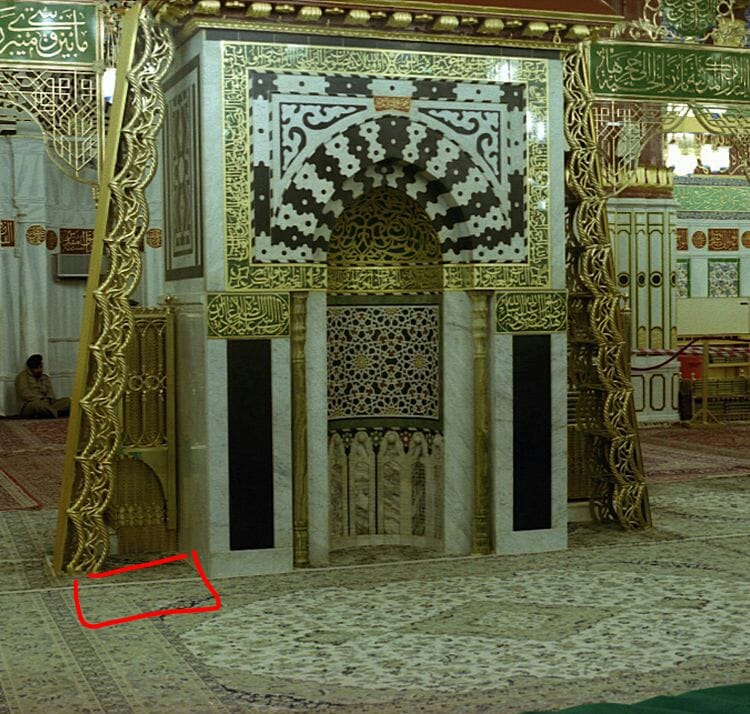
Alhamdulillāh, so chuffed. Managed to pray directly at the spot where it is said by some that the Prophet Muhammad sallallāhu alayhi wa sallam would sometimes offer of his sunnah prayers, to the left of his mihrab (marked in red) in the rawdah of his masjid.
Of course the mihrab didn’t look like this at the time of Prophet sallalāhu alayhi wa sallam but this is exactly where the he sallalāhu alayhi wa sallam used to stand to lead the prayer with the early Muslim believers. Not too far to the left of this picture is the Prophet’s apartment where he sallallāhu alayhi wa sallam is currently buried.
The Rawdah is the blessed area between the Minbar of the Prophet sallalāhu alayhi wa sallam and his house.
“The area between my house and my minbar is one of the gardens of paradise.” [Bukhari & Muslim]
MASJID QIBLATAYN
Muslims previously prayed towards masjid al-Aqsa in Jerusalem (the third holy site for Muslims where many of the previous Prophets of God have traversed) not the Ka’bah in Makkah. It was at the site of this masjid whilst live in prayer, the Prophet Muhammad sallallāhu alayhi wa-sallam (peace & blessings of God be upon) recieved wahi (revelation from God) to turn and face Makkah. From hereonwards, the Qibla has been the Ka’bah in Makkah.
What is interesting to note is that this turn in direction was only confirmed in the Qur’ān much later by Allāh. This is significant as it confirms that the Prophet sallalāhu alayhi wa-sallam was also receiving a second type of revelation that did not form the Qur’ān. Why is this important? To respond to those who only follow the Qur’ān and reject the Sunnah.

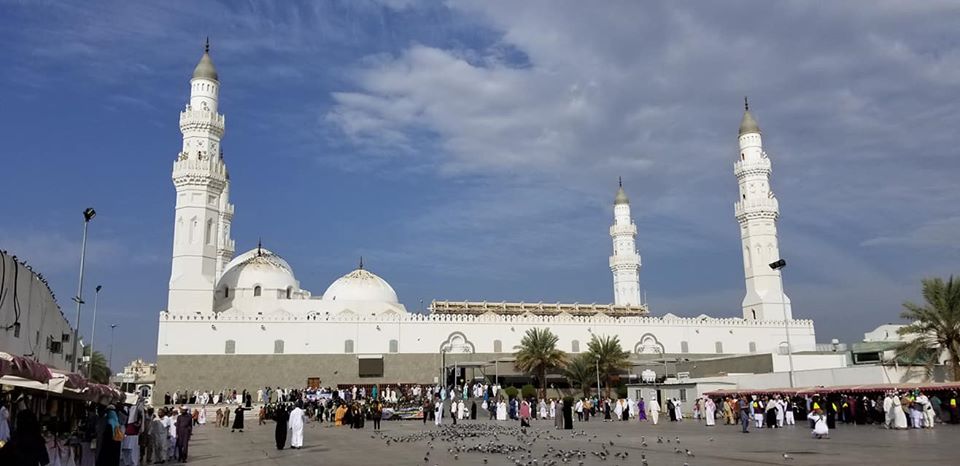
MASJID QUBA
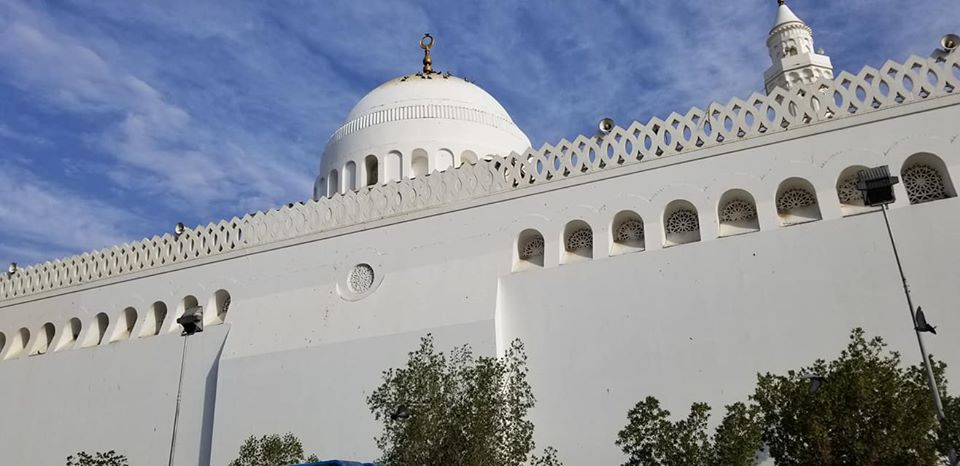
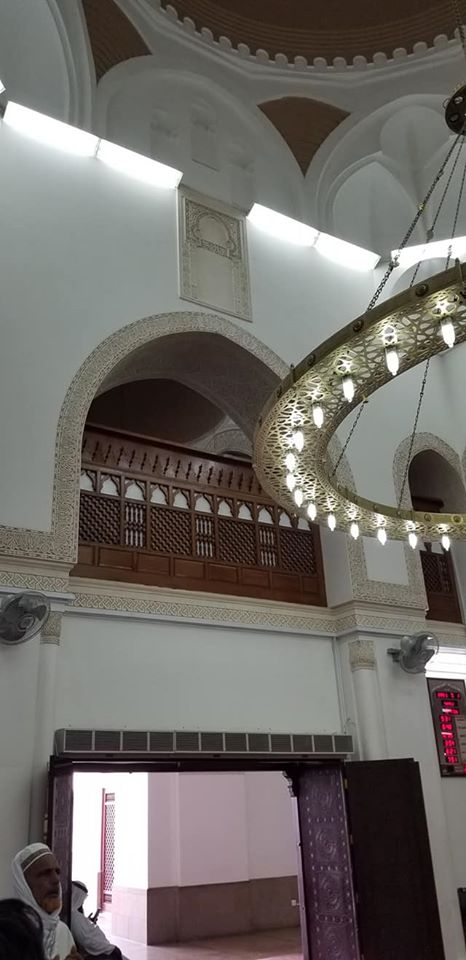
The first mosque built by the Prophet Muhammad sallallāhu alayhi wa-sallam.
When migrating from Makkah to Madina, the Prophet sallalāhu alayhi wa-sallam waited here for two weeks with his best friend Abu Bakr radi-Allahu-an (may God be pleased with him) for the arrival of his cousin Ali radi-Allāhu-an who remained behind in Makkah to return the goods that were entrusted with the Prophet sallalāhu alayhi wa-sallam by the polytheists of Makkah (the irony of ironies that they recognised him as “Al-Amin” which means “the truthful one” and entrusted him with their belongings for safe keeping but rejected his message, calling him all sorts.)
The Prophet sallalāhu alayhi wa-sallam would return to Masjid Quba on Saturdays and pray two rakat (units of prayer) and said, “Whoever purifies himself in his house (i.e. wudu), then comes to the mosque of Quba and prays in it, he will have a reward like the Umrah pilgrimage.” (Ibn Mājah). The area is now part of the city of Madina.

MOUNTAIN OF UHUD
“Uhud is a mountain from the mountains of Paradise, it loves us and we love it” [Bukhari & Muslim].
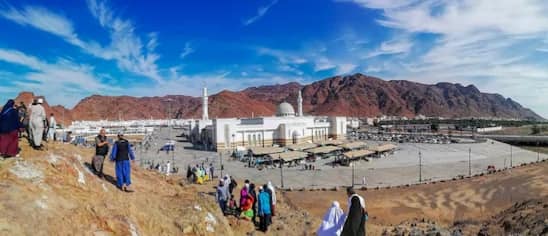
The famous Mount Uhud towering in the background. The location of the second major battle between the Muslims in Madina and the polytheists from Makkah.
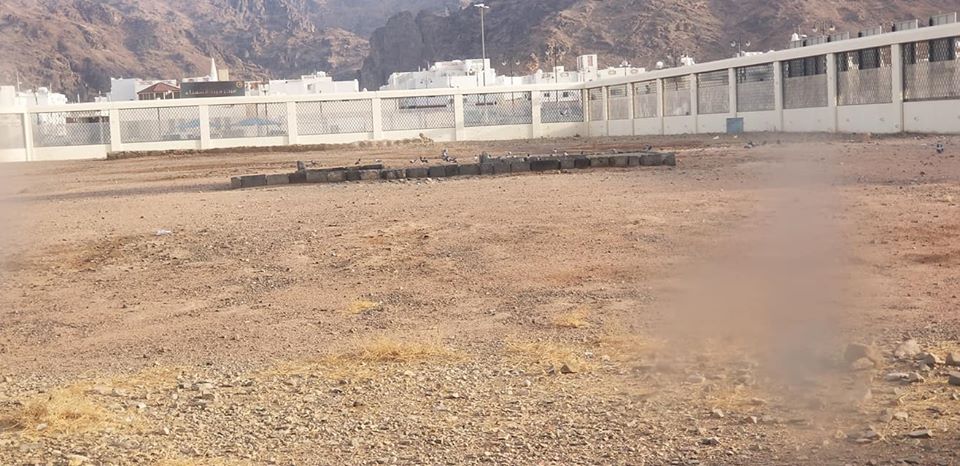
The resting place of the 70 or so martyrs. The Prophet sallallāhu ‘alayhi wa-sallam went to meet the pagan Makkans for Battle at Uhud with orginally a group of approximately 1,000 Muslim men. Shortly before the battle commenced, ‘Abd-Allah ibn Ubayy (the chief of the hypocrites) and his followers of 300 fellow hypocrites withdrew their support and returned to Madina (the last picture is the location where some say this betrayal took place). This left approximately 700 sahāba (companions of the Prophet) radi Allāhu ‘Anhum against about 3000 better armed pagan Makkans, a ratio of more than 4:1. Despite this, the Muslims were on top during the early stages of the battle, winning key duals and making the Makkans retreat. That was until a group of around 50 archers who had been stationed specifically on a hill to prevent the horsemen waiting in the distant (lead by Khalid bin Walid radi-Allāhu-an who was a non Muslim pagan at the time but would later convert to Islām and become of the best military commanders we have had) to come around and attack the Muslims from the back disobeyed the Prophet’s orders thinking that the battle had been won and that they were going to miss out on the spoils. The abandoning of this position led to the already outnumbered Muslims being attacked from both sides, chaos in the ranks and the loss of approximately 70 sahāba radi-Allāhu anhum, the most famous being Hamza ibn Abdul-Muttalib, the dearly beloved and close uncle to the Prophet sallalāhu alayhi wa-sallam (although they were nephew and uncle, they were close in age). Hamza ibn Abdul-Muttalib was deliberately targetted by a slave of Hind who was recruited to kill him due his expertise with a javelin sphere; an act of vengeance for killing her father in Battle of Badr. She would later mutilate his body in a sick sadistic act of revenge. He along with all the martyrs are currently buried at this site and a masjid has been erected in his memory.